
Why your lenses matter more than your display.
Beyond the Specs.
In previous Beyond the Spec’s blog posts we discussed why the PC is the most important part of choosing a VR headset in (A Flight Simmer’s Guide to Virtual Reality & Pimax VR) as well in part two we discussed the display technology in (QLED vs Mini-LED vs Micro-OLED for Flight Simulation VR). If your interested in learning more about VR I highly recommend giving these a read. All the specs on a new VR headset are available so click the links to read these as well.

Resolution is King .. or is It?
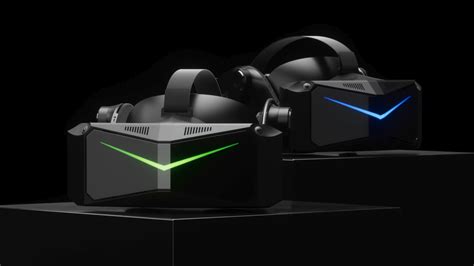
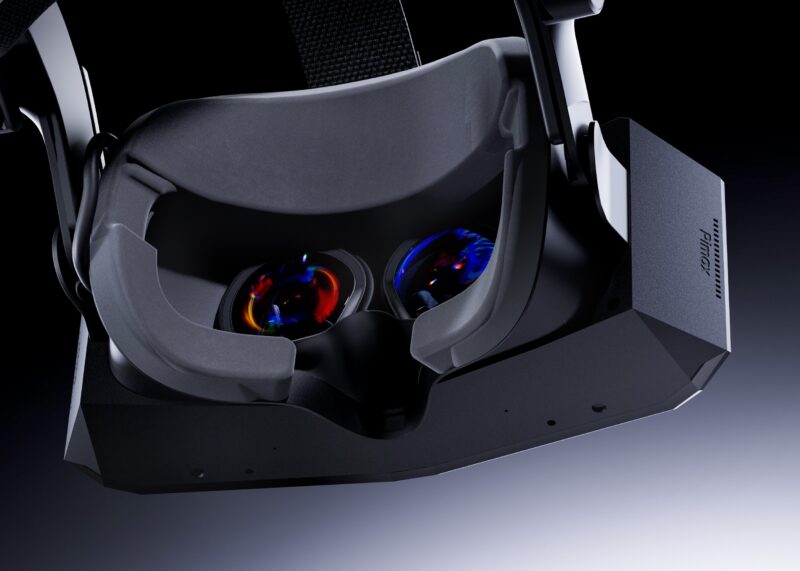
Most VR buyers obsess over resolutions such as 3840×3840 as well as 4K. They look at headsets with Micro-OLED displays. These incredible displays can have up to 57 PPD for incredible clarity in VR headsets like the Pimax Crystal Super (pictured above). But here’s the reality! If the lenses can’t deliver that image to your eyes, then those pixels are wasted & the whole choice is wrong!
Think of buying a $5,000 camera and putting a dirty piece of glass on the front of it! The sensor is amazing but the the photograph isn’t. That’s exactly how VR works where the display creates the image on the display then it passes through the lens to be viewed by the user.
These lenses are there to enhanced your display and will ultimately determine how much as well as how clearly the display is seen by your eyes. That’s really important to understand!
Read More in this Series:
- Beyond the Specs! A Flight Simmer’s Guide to Virtual Reality & Pimax VR. (HERE)
- Beyond the Specs. The Optics Behind VR.
- QLED vs Mini-LED vs Micro-OLED for Flight Simulation VR.
- The Ultimate Pimax VR Buyer’s Guide (2026).
- The Software Technology making VR Incredible! (Upcoming)
Why VR Needs Special Lenses.
Without optical lenses, your expensive VR Oled screens wont be visible to your eyes. Your eyes in that new VR headset are only a few millimetres away from those incredible 4K displays. Your eyes simply will not be able to focus on screens that close to you.
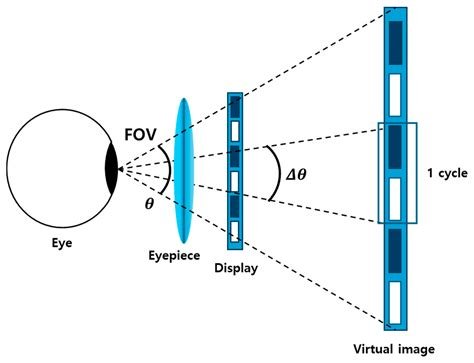
This is where your lenses become incredibly important to the final VR experience. The VR headset needs these lenses to work as we desire. These lenses have a number of important qualities that we can discuss.
The lens to be effective must magnify then focus the image as well as reduce distortion then maximise field of view all the while maintaining clarity and finally minimise chromatic aberration.
(Chromatic Aberration is a lens failure that causes different colors of light to focus at different points, creating colored fringes along high-contrast edges in photos or videos. It appears as red-green, blue-yellow, or magenta-purple outlines near object edges.)
The better the lens, the less work your eyes need to perform & long VR sessions become much more comfortable. The overall immersion of the VR experience is then magnified to a place where we can fully believe that we are driving that race car, or flying that jet fighter or even a huge airliner across the skies.
Lens Types Used in VR Headsets.
Fresnel Lenses.
Let’s take a look at the variety of current lenses used on VR headsets! What they look like so you can recognise them when your looking for the best results in you VR flying experience.
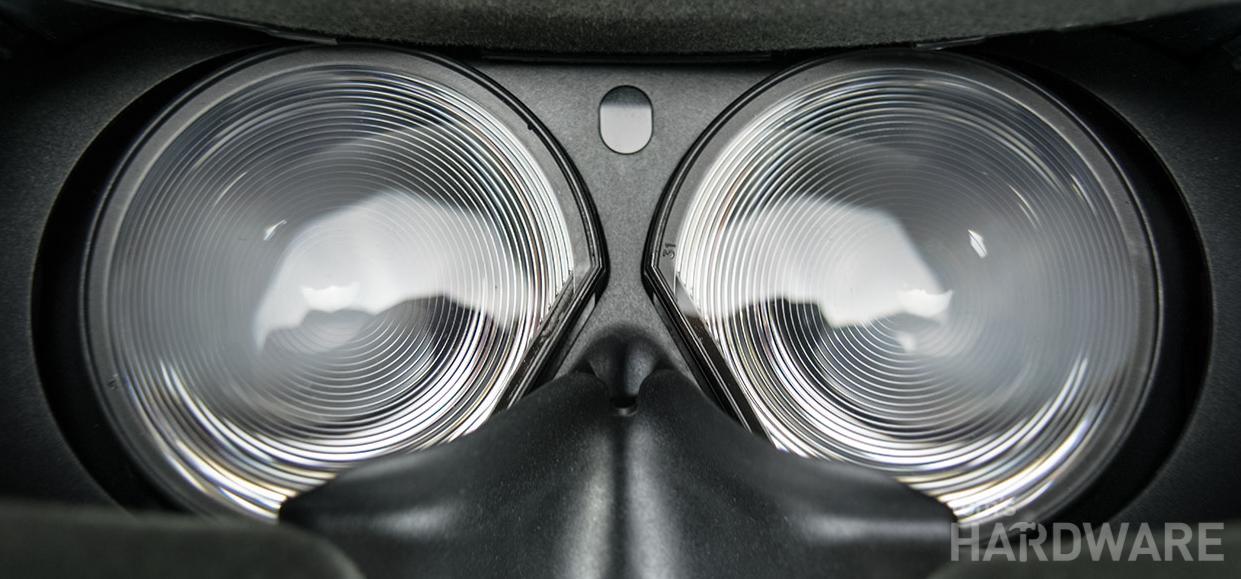
Fresnel lenses were the first developed and used in early VR headsets like the Oculus Rift (s). These were used in quite a few others until technology caught up and the newer lenses we created which we will discuss below. They can be easily identified by the circular rings you see in them.
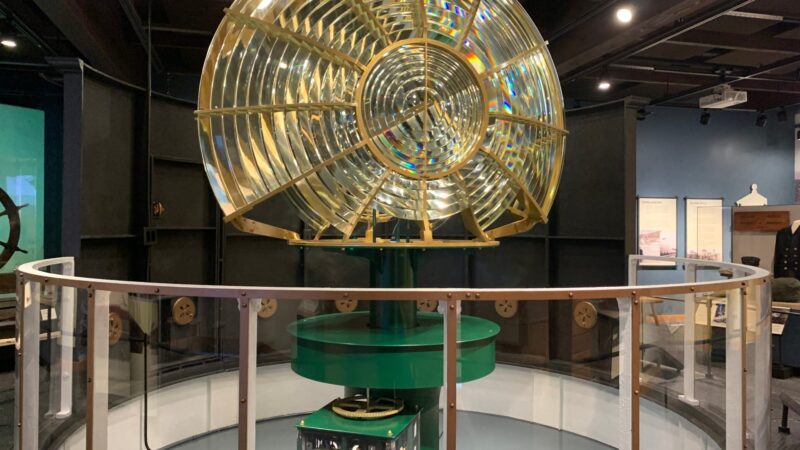
Fresnel Lighthouse Lens.
Developed originally for lighthouses to fucus light into a strong beam they also focus light or an image that is close to our eyes. Instead of thick glass which would be heavy the lens is cut into concentric rings hence the rings you see on a Fresnel lenses.
Advantages of Fresnel lenses are that they are that they are – Cheap – Lightweight – Large FOV – Easy to manufacture.
Disadvantages of Fresnel lenses are – God Rays – Glare – Small sweet spot – Edge blur – Internal reflections.
This is why Rift and Quest 2/3s users constantly adjusted the headset. Its a challenge to get right in that sweet spot to get the result you want. Move it one millimetre out of the sweet spot and the image becomes blurry.
In my own experience when its working well its pretty good and you forget your in a headset but when the headset moves then you need to just readjust it again to find the sweet spot again.
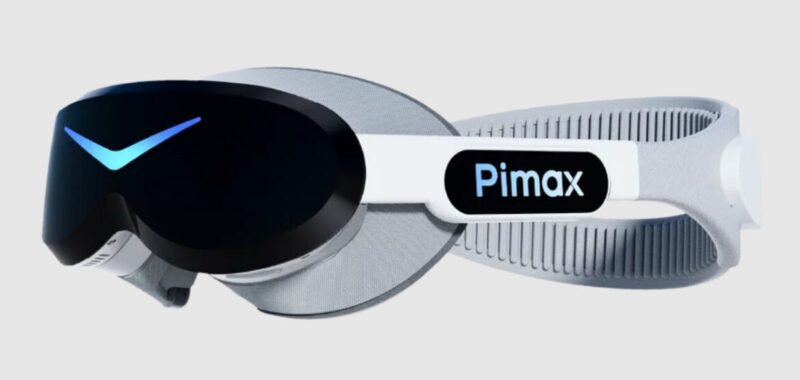
Glass Aspheric Lenses.
This is where Pimax became different rather than Fresnel rings that are cheap and easy to produce they went a step further and used precision-machined glass.
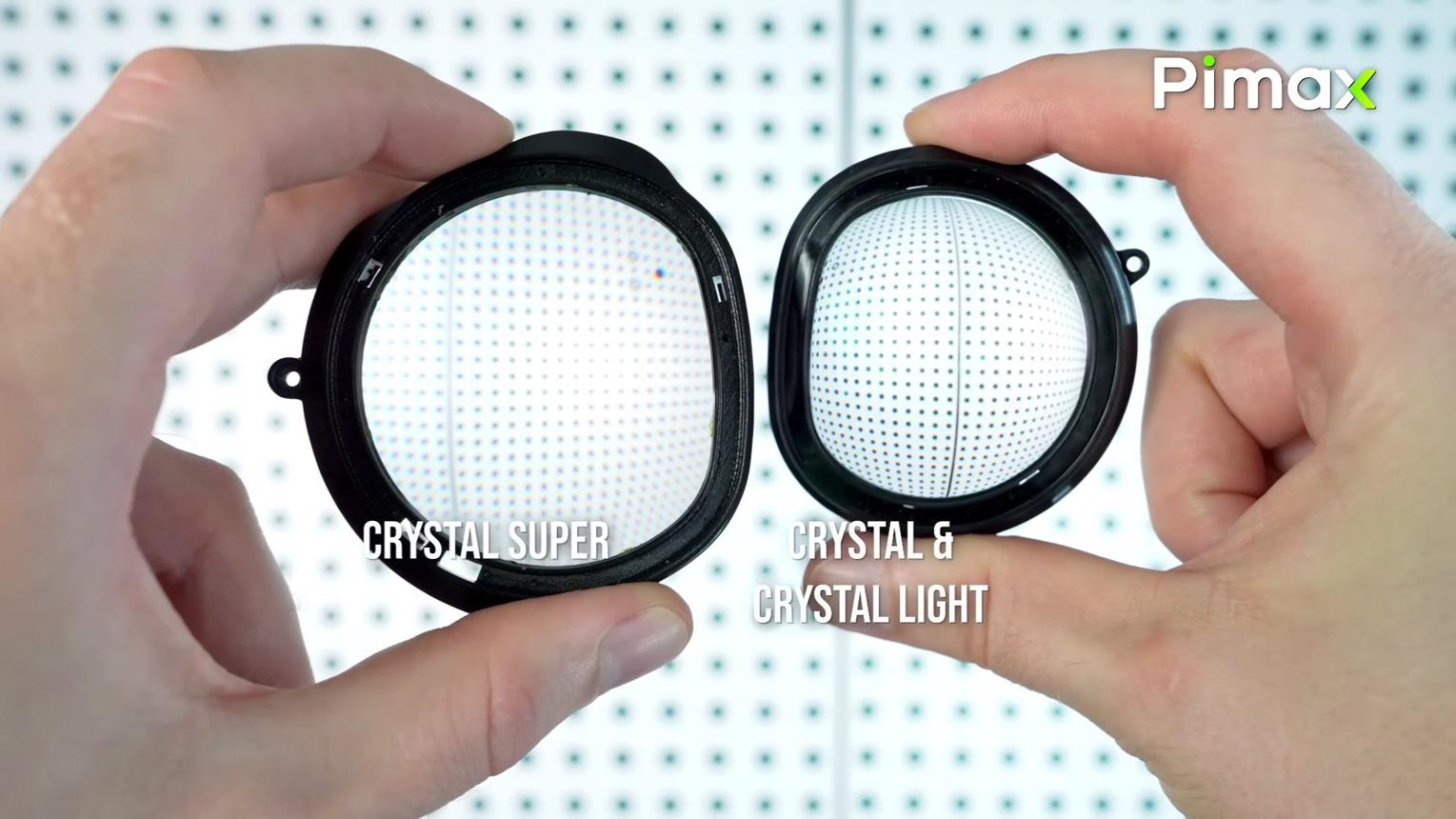
This makes aspheric lenses that Pimax use perfect for DCS when your searching for that small agile and elusive Mig-21s sneaking up on you or increasing the visual fidelity of X-Plane or MSFS as wellas Sim Racing to get that perfect apex.
The benefits are many such as – Excellent centre clarity – Excellent edge clarity – Huge sweet spot – Very low distortion – Minimal chromatic aberration – Extremely sharp cockpit gauges.
The drawbacks are that they are – Heavy – Expensive – More difficult to manufacture and require a larger headset to accommodate them.
Why Glass Matters.
There are lots of reason why glass is much better than plastic lenses. Plastic expands with temperature where as glass barely does. Glass scratches less easily than plastic as well and it maintains its optical shape more reliably.
Glass provides significantly better optical precision, that’s why premium camera lenses are used in Pimax products to offer a superior experience from the beginning. Thats why glass is also used in microscopes and telescopes where visual quality really matters.
Pancake Lenses.
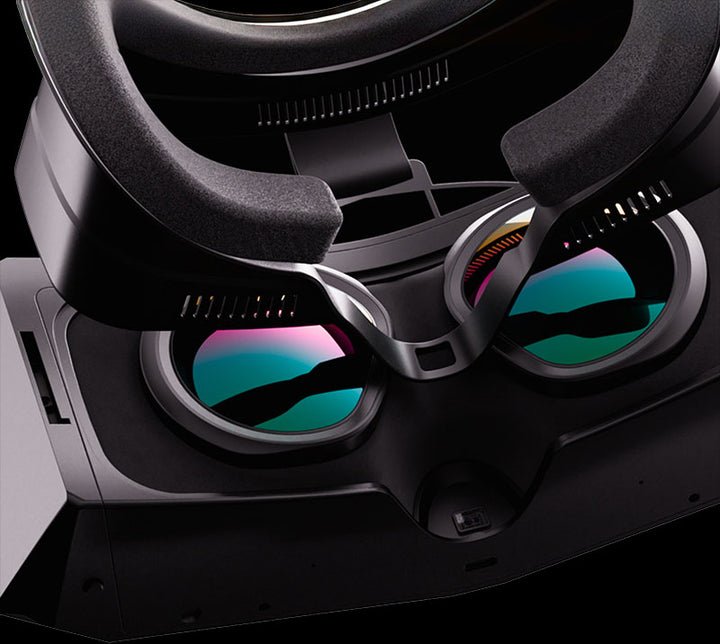
Pancake lenses are probably the biggest optical advance in VR over the past five years. The difference is instead of a single large magnifying lens are created with pancake optics that fold the light several times inside the lens assembly. This allows much smaller headsets such as the Pimax Dream Air with much thinner optics that create much better edge clarity with a larger sweet spot plus a much lower distortion of the image. Really great for your VR experience.
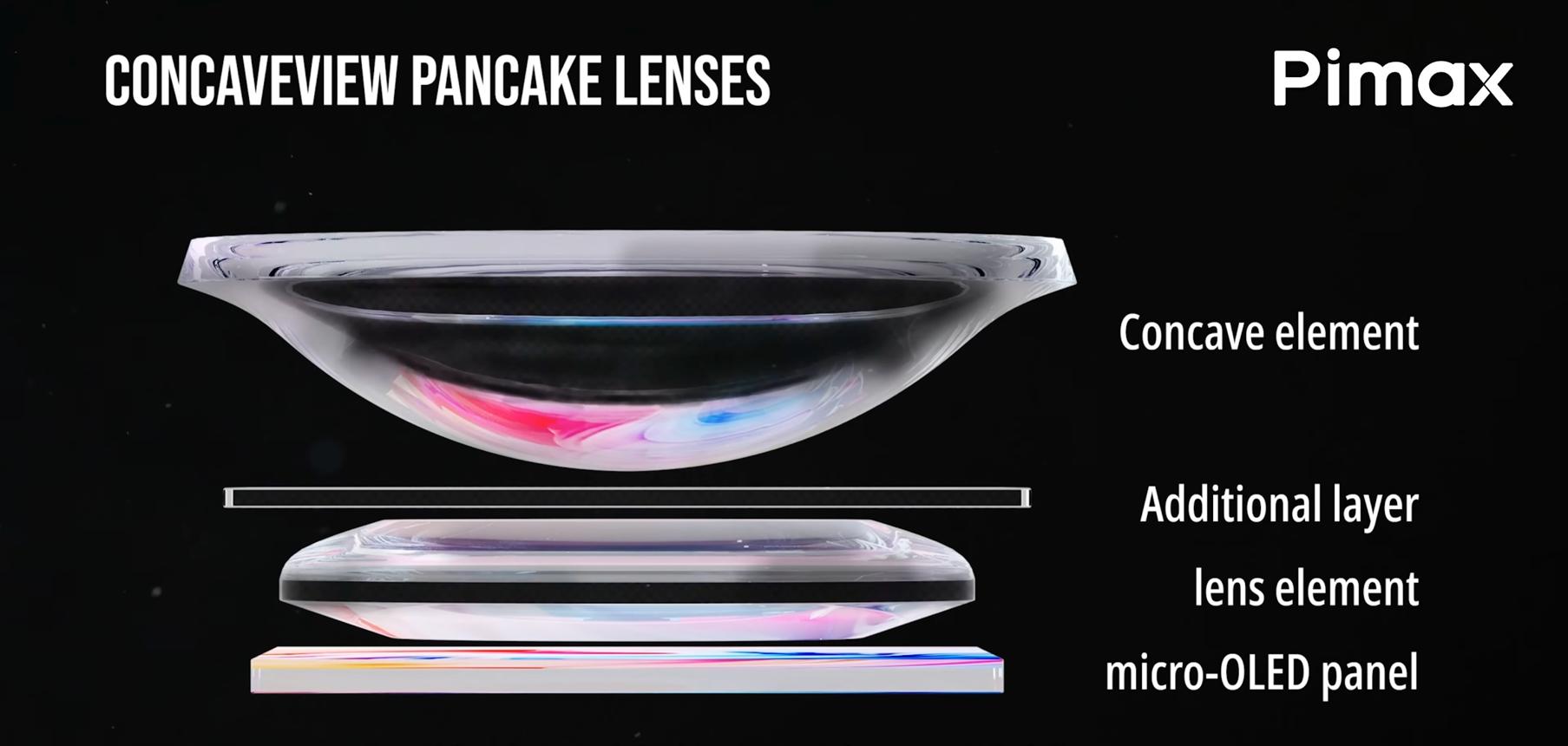
However there are negatives as with every option such as every reflection loses brightness. This is why pancake lenses almost always pair with Micro-OLED or very bright LCD displays. That isn’t coincidence its just physics at work.
So the advantages of Pancake lenses are – Smaller headset – Better edge-to-edge clarity – Huge sweet spot – Less distortion – ✓ Better comfort for your overall VR experience.
Disadvantages are also present such as – Lower brightness – More expensive – Complex manufacturing ✗ Can show glare in high-contrast scenes depending on implementation.
Hybrid Optical Systems.
Manufacturers are now combining a number of additional custom coatings to their glass elements adding special anti-reflective layers. New technology like eye tracking is now often included that ensures your maximum clarity which follows where your eye is actually looking.
This also helps reduce dynamic distortion correction and with the use of automatic IPD with software calibration the optics are no longer “just lenses.” They’re complete optical systems!
Additional Technology Now Available!
Eye Tracking.
This deserves its own section because eye tracking isn’t only for foveated rendering as it also allows automatic IPD (interpupillary distance), which is the distance in millimeters between the centers of your pupils. It is crucial for ensuring that lenses, especially in glasses and binoculars, are properly aligned for optimal vision.
Eye tracking also ensures better distortion correction plus improved binocular alignment that can reduced eye strain and add dynamic rendering which Pimax has invested heavily here. This is now a big feature in many top end high quality VR headsets like the Pimax range.
Get Amazing Merch at LetsFlyVFR – ETSY Store.



Aircraft from WWII to Present and Humorous Gifts for Friends & Pilots!
Hoodies – T Shirts – Mugs – Posters – All available Now!
Get Yours Now!
Automatic IPD.
Most headsets require manual adjustment so premium Pimax headsets automatically move the lenses to ensure your experience is the best it can possibly be without you even knowing. The advantages are massive with sharper images also reducing eye fatigue with the benefit of better stereo depth and faster setup!
Software is Improving Too! Easy Setup = More Play Time!
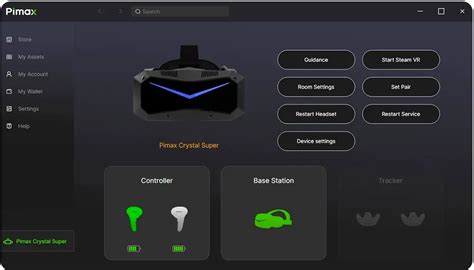
Who wants to spend hours setting up a new headset? Not me I just want to play and that’s why Pimax have developed their Pimax Play software. This is a streamlined setup experience for any Pimax model you choose.
When choosing a new headset the initial setup and ongoing maintenance and updates to headsets and controllers is important. Good quality UI is essential to that being hastle free.
Distortion Profiles.
People rarely discuss this issue so we will because its important! I want to cover all the good as well as well as bad points regarding lenses for your chosen VR headset. Its important to understand every VR lens bends light and software must mathematically reverse that distortion. If its done poorly then we get low quality calibration which equals warping and blur.
High-end manufacturers spend years refining distortion profiles so it’s one of the least visible but most important parts of a modern VR headset and Pimax have taken a lot of time to develop there system for a superior experience.
Comparing Today’s Technologies.
| Technology | Clarity | Sweet Spot | God Rays | Weight | Cost | Best For |
|---|---|---|---|---|---|---|
| Fresnel | ★★☆☆☆ | ★★☆☆☆ | High | Low | Low | Budget VR |
| Plastic Aspheric | ★★★☆☆ | ★★★☆☆ | Low | Medium | Medium | Mixed Use |
| Glass Aspheric | ★★★★★ | ★★★★★ | Very Low | High | High | Flight Simulation |
| Pancake | ★★★★★ | ★★★★★ | Very Low* | Very Low | High | Modern Premium VR |
*Pancake lenses generally eliminate Fresnel-style god rays, but some designs can exhibit glare or internal reflections in very high-contrast scenes. (pcgamer.com)
Experience Flight Simulation Like Never Before
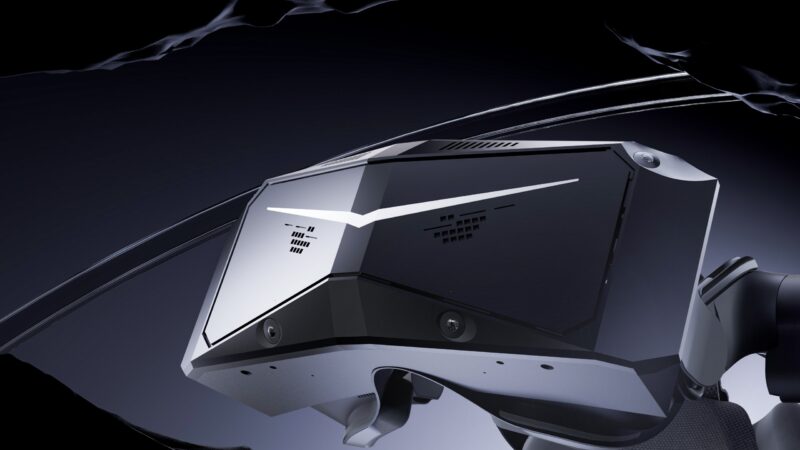
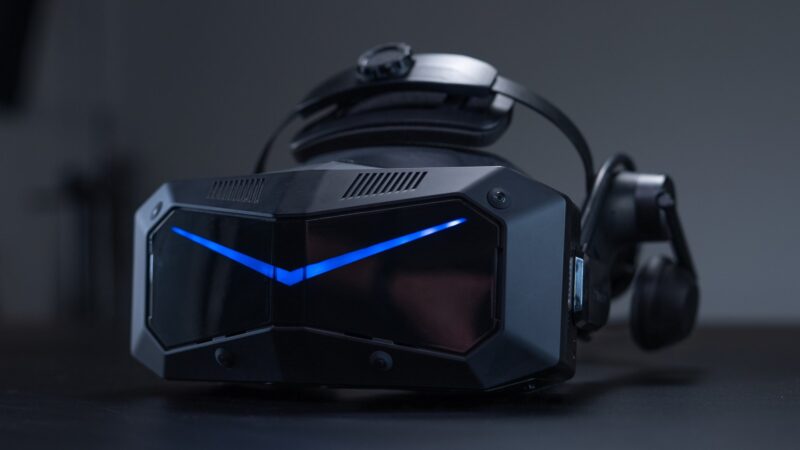
Choose Your Pimax Crystal Light, Crystal Super or Dream Air Today and Enjoy an Exclusive 2% LetsFlyVFR Discount*
*Discount applies to eligible Pimax headsets. Dream Air SE excluded.
Where Every Pimax Headset Fits.
Lets take a look at the lese options for specific Pimax headsets then we will look at other brands and what options they have available at time of writing.
The Pimax range uses amazing quality Glass lenses with high quality OLED displays for amazing clarity. Lenses are Aspheric and Pancake for the Super and Dream Air respectfully with the Crystal light using the Aspheric glass lens variety. All of these are top quality and reported to be incredibly clear.
| Headset | Display | Lens Technology | Best For |
|---|---|---|---|
| Crystal Light | QLED + Mini-LED | Glass Aspheric | Best value for serious flight simulation |
| Crystal Super (Micro-OLED) | Sony Micro-OLED | Pancake | Maximum image quality, colours and compact optics |
| Dream Air | Sony Micro-OLED | Pancake | Lightweight premium PCVR with the same optical stack as the Crystal Super Micro-OLED (Pimax Store) |
Other Major VR Headsets.
Lets look at some of the other great VR headsets available currently and what lenses they use. The Meta Quest 2 and the Quest 3S use Fresnel and I own a 3S. Its ok but suffers from all the issues we have already discussed.
If price is important than your going to find these in the less premium models. You can still have a great experience but it isn’t going to match the other lenses we have discussed honestly.
| Headset | Lens Type |
|---|---|
| Meta Quest 2 | Fresnel |
| Meta Quest 3 | Pancake |
| Valve Index | Dual-element Fresnel |
| Bigscreen Beyond 2 | Pancake |
| Apple Vision Pro | Pancake |
| Pimax Crystal Light | Glass Aspheric |
| Pimax Crystal Super Micro-OLED | Pancake |
| Pimax Dream Air | Pancake |
Final Thoughts.
If Episode One taught us the importance of choosing the correct VR headset for your PC then now we understand what displays can do to make the experience premium the of course the how NOW how the optics determine how much of that image actually reaches your eyes.
Two headsets with the same resolution can deliver dramatically different experiences because of their lenses. That’s why modern VR has shifted from a race for more pixels to a race for better optical systems.
Get a Discount Now!
Get Your Discount Today!
Get Your Discount Today!
For flight simulation, where reading tiny cockpit text and scanning distant aircraft matters, lens quality can be every bit as important as display resolution. Whether you prefer the exceptional clarity of Pimax’s glass aspheric optics or the lightweight comfort and compact design enabled by pancake lenses, understanding the technology helps you choose the headset that best matches your flying style—not just the one with the biggest numbers on the box.
My Recommendation!
This is also the perfect opportunity to experience these newer lenses as Pimax actually uses two completely different optical philosophies across their range of VR headsets. The Pimax Crystal light uses Glass Aspheric while the Pimax Crystal Super uses Pancake and the new and very exciting Dream Air also uses Pancake lenses. It shows how different lens types are applicable in different use cases.
Obviously the choice is yours, so considering your use case will determine the best option for your future incredible VR experience! Feeling a need to duck down or flinch away from those tracer rounds, the experience is yours but Pimax will make you feel the action and introduce you to a new and amazing world within VR.
If your interested in a full break down of the Pimax products available LetsFlyVFR has great discount links on this series of posts to save our readers money and get amazing quality VR experiences with Pimax. The Ultimate Pimax VR Buyer’s Guide (2026).
Get your Discount!
Author
Brendon McAliece (Aka Gunnie) is a military veteran with 23 years working on Jet Fighters, their weapons systems and ejection seat/module systems as well as munitions and R&D. Involved with flight simulation since the 1980s, he has flown all the major flight simulators over the years.
He is an Australian expat who has lived in Malaysia, UK, Saudi Arabia and more recently Thailand. He is a multi-lingual blogger who loves to share his life experiences here on LetsFlyVFR.com and DreamingGuitar.com, with his lifestyle and Travel experiences Blog plus his Dreaming Coffee website.
Learn More @
DreamingGuitar.com – DreamingCoffee.com
LetsFlyVFR ETSY Store – Discover PIMAX VR Now!

( HOME – BLOG – SHOP – ABOUT )
As an PIMAX affiliate I may benefit from qualifying sales.