
You’ll be Better After These TIPS!
Understanding Air Combat, Fighter Aircraft, Combat Tactics and the Skills Behind Winning a Dogfight
Dogfighting is one of the most fascinating and demanding aspects of military aviation. From the early aerial battles of World War I to the sophisticated fighter aircraft of today, air combat has continually evolved alongside advances in aircraft design, weapons technology and pilot training.
But what actually makes a successful fighter pilot? Is it the aircraft, the pilot’s experience, superior manoeuvrability or the ability to understand and manage energy?
Whether you’re interested in aviation history, modern military aviation, DCS World, Falcon BMS or simply want to understand how aerial combat works, there are plenty of questions worth exploring.
In this guide, we’ll answer ten of the most frequently asked questions about dogfighting, covering aircraft performance, pilot skill, training, combat principles, situational awareness and more.
Let’s get started!
Table of Contents
- What are the key tactics used in dogfighting?
- What are the best fighter jets for dogfighting?
- How important is pilot skill compared to aircraft capability?
- How do fighter pilots train for dogfighting?
- What are the most common mistakes made during dogfights?
- What are some effective ways to evade an enemy fighter?
- What weapons and countermeasures are used in air combat?
- Why is situational awareness so important?
- How do fighter pilots communicate with their wingmen?
- How do weather conditions affect dogfighting?
1. What Are the Key Tactics Used in Dogfighting?
Dogfighting is close-range aerial combat between opposing aircraft aften referred to as BFM or Basic Fighter Manoeuvres. Although modern air warfare increasingly involves beyond-visual-range engagements, close-range combat remains an important part of fighter aviation training.
A pilots ability to fly their aircraft at the edge of performance is often pushed to the limit in BFM as well as being the ultimate arena for pilots to show their prowess in the air.
Several fundamental principles influence the outcome of an aerial engagement.
Energy Management:
Energy management is one of the most important concepts in air combat. This is relevant in both short range engagements as well as BVR (Beyond Visual Range) weapons deployments.
An aircraft possesses two primary forms of mechanical energy:
- Kinetic energy – the energy associated with speed.
- Potential energy – the energy associated with altitude.
A fighter pilot must understand how speed and altitude relate to aircraft performance. Manoeuvres that increase turning performance may also result in energy loss, while climbing can exchange speed for altitude.
Understanding these relationships is essential to appreciating why some aircraft perform better in particular combat situations. The understanding of a specific aircrafts use of energy and how fast it depletes and regains energy is an important consideration in every manouver.
Turn Fighting
Turn fighting generally involves attempting to gain a positional advantage through manoeuvrability and turning performance.
Aircraft with excellent sustained turning capability can have an advantage in prolonged turning engagements. This has been the F-16’s winning strategy for many years in a turning fight being able to sustain 9G’s at around 440 knots and rate around the circle faster than anyone else.
However, turning performance depends on many factors, including speed, altitude, aircraft configuration and available engine power. Altitude also makes a significant difference between aircraft as an example the F-15C is designed to fly fast and high with big wings designed for thin high altitude but the F-16 is more at home at lower altitudes where its thinner wings have some purchase on the air!
Energy Fighting
Energy fighting places greater emphasis on maintaining speed and altitude rather than relying entirely on turning performance.
Aircraft with powerful engines and good energy retention may have advantages in this type of engagement. You can picture this as more a vertical climb and diving type of fight. The WWII 109 and FW 190 were as I understand it food examples of this as is the F-4 Phantom in an engagement where the Mig-21 cant follow it often due to its small wings.
Situational Awareness
Knowing where the opposing aircraft is located, understanding your own aircraft’s position and maintaining awareness of the surrounding airspace are essential.
A pilot who loses sight of the bigger picture can quickly become vulnerable. Lose sight & Lose the fight has been a fighter pilots cry since probably WWI.
Teamwork
Modern fighter aviation is rarely about individual performance alone. Wingmen work together, sharing information and maintaining awareness of the wider engagement.
Ultimately, successful air combat involves a combination of aircraft capability, pilot judgement, training and situational awareness. In DCS world this facet is often lost on new players who go for glory on their own. Working with a wingman is always going to make you a stronger enemy.
2. What Are the Best Fighter Jets for Dogfighting?
There is no single aircraft that can be considered the best dogfighter in every situation.
Aircraft are designed around different requirements, and their performance depends on factors such as engine power, aerodynamic design, manoeuvrability, sensors, weapons and operational conditions.
Here are four modern fighter aircraft frequently discussed when comparing air combat capabilities.
F-22 Raptor
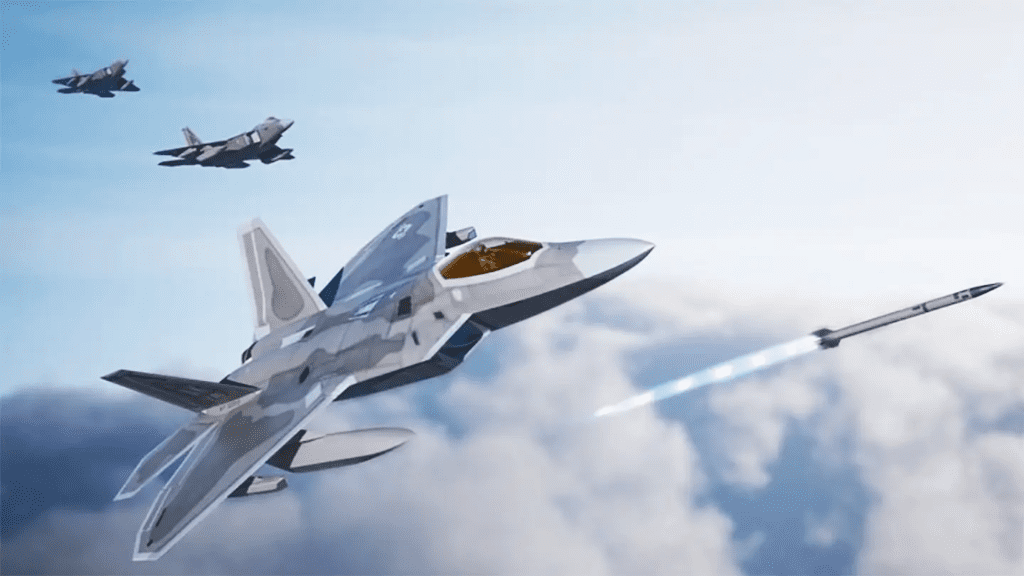
The F-22 Raptor is widely regarded as one of the most capable air-superiority fighters ever developed.
Its combination of stealth, powerful engines, advanced sensors and thrust-vectoring capability makes it particularly impressive.
It was designed to establish air superiority rather than simply win traditional turning engagements.
Eurofighter Typhoon

The Eurofighter Typhoon is a highly capable multirole fighter with excellent aerodynamic performance.
Its delta-wing and canard configuration provides impressive manoeuvrability, while its powerful engines support strong performance across a wide flight envelope.
Sukhoi Su-35
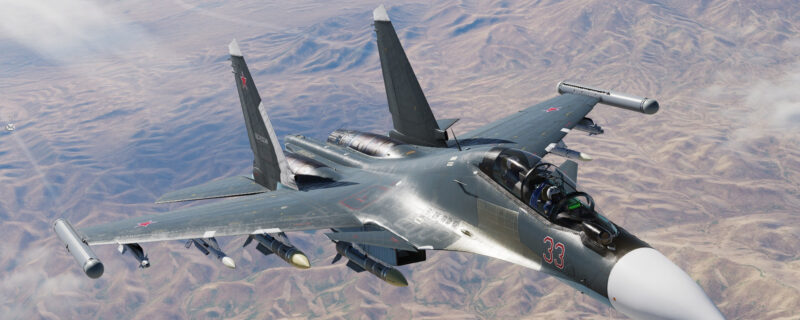
The Russian Su-35 is known for its powerful engines and thrust-vectoring technology.
Its manoeuvrability has attracted considerable attention, particularly when discussing high-angle-of-attack flight and post-stall manoeuvres.
F-16 Fighting Falcon
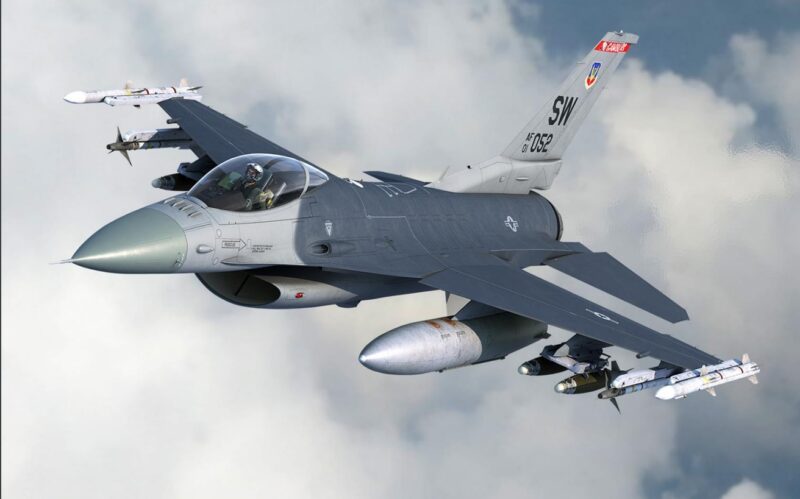
The F-16 Viper is one of the most widely operated fighter aircraft in the world.
Its lightweight design, powerful engine and excellent manoeuvrability have made it a respected air combat platform.
The F-16 demonstrates that a successful fighter design does not necessarily need to be the largest or most powerful aircraft.
So which is best?
The answer depends on the circumstances.
A modern air engagement involves considerably more than turning performance. Sensors, weapons, pilot training, electronic warfare and the ability to detect an opponent can be just as important as aerodynamic capability.
For flight simulator enthusiasts, comparing these aircraft in DCS World or Falcon BMS can be an interesting way to appreciate their different design philosophies.
Its possible to compare Energy Manoeuvrability Diagrams to determine the best performance parameters in speed and G but this is only part of the story! You can fly your perfect jet using these statistics and still lose!
3. How Important Is Pilot Skill Compared to Aircraft Capability?
This is one of the most interesting questions in military aviation.
Does the best aircraft always win?
Absolutely not.
Aircraft capability matters enormously, but pilot skill remains a critical factor in determining the outcome of an engagement.
A highly experienced pilot understands their aircraft’s limitations, performance characteristics and operating environment. Tactics along with being able to understand the opponents energy state mid fight can determine a good pilots next move and gain the advantage as well as the kill!
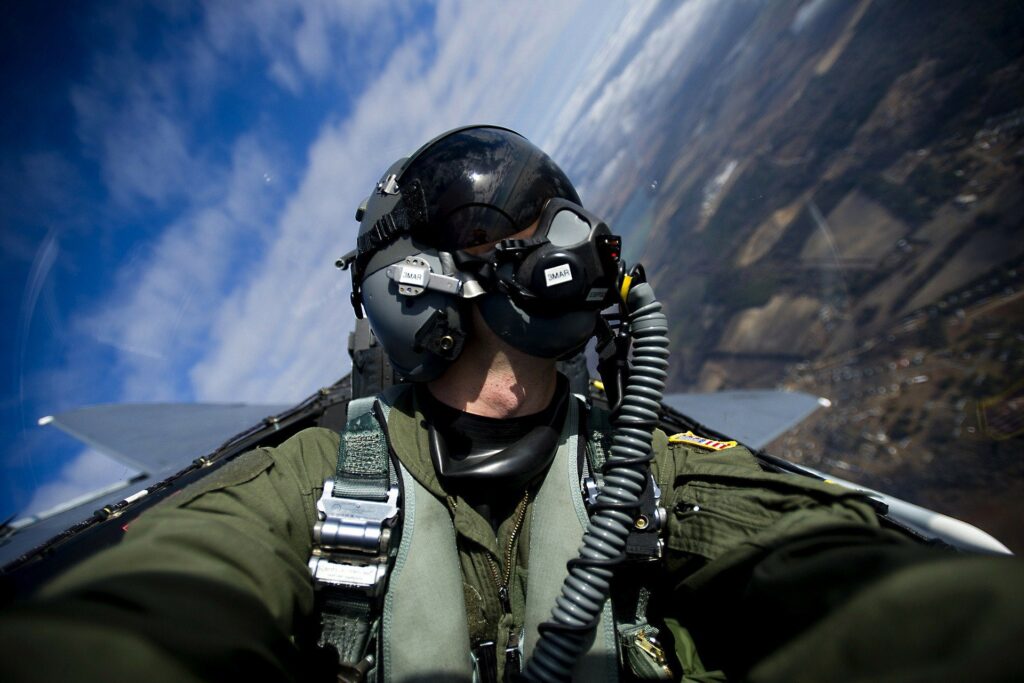
They also possess the ability to interpret changing situations, maintain awareness and make decisions under considerable pressure.
Consider two pilots flying different aircraft.
One may have a technologically superior fighter but limited experience. The other may be flying an older aircraft but possess considerably more experience and a better understanding of its capabilities.
The outcome is not necessarily predictable.
However, it would also be incorrect to assume that pilot skill can always overcome a technological disadvantage. Modern sensors, weapons and electronic systems can create substantial advantages.
The bottom line: Aircraft capability provides the tools, but pilot skill determines how effectively those tools are used.
4. How Do Fighter Pilots Train for Dogfighting Situations?
Military fighter pilots undergo extensive training before becoming qualified for operational air combat.
Training begins with fundamental flying skills and progressively introduces more demanding flight operations and simulated combat environments.
Some important elements include:
Basic Aircraft Handling
Pilots must understand their aircraft’s flight characteristics, limitations and performance throughout its operating envelope.
Formation Flying
Formation flying develops the ability to operate safely and effectively alongside other aircraft.
Air Combat Manoeuvring
Pilots practise simulated engagements to develop their understanding of aircraft performance, positional awareness and decision-making.
Simulator Training
Modern flight simulators are an essential part of fighter training.
They allow pilots to experience complex scenarios, practise procedures and evaluate their performance without the expense and risks associated with every exercise being conducted in a real aircraft.
Debriefing
One of the most important aspects of training occurs after the flight.
Pilots review recorded information, examine decisions and identify mistakes that can be corrected during subsequent training.
For enthusiasts using DCS World or Falcon BMS, this is an excellent principle to adopt.
Don’t simply fly another mission because the last one ended badly. Review what happened, understand why and identify what you could improve.

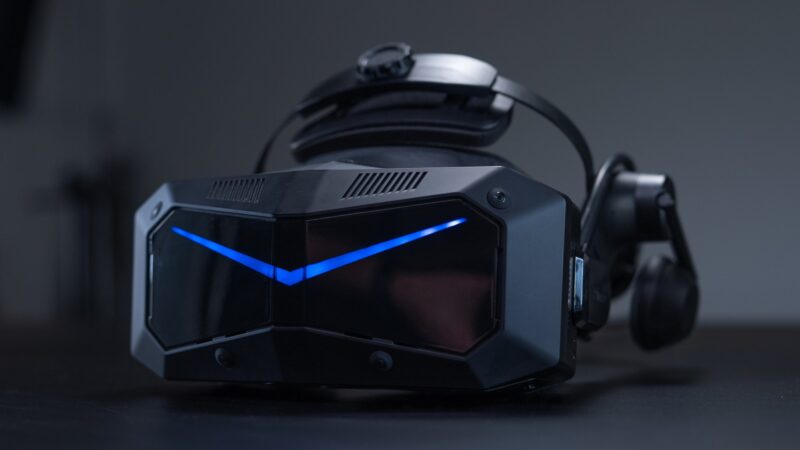

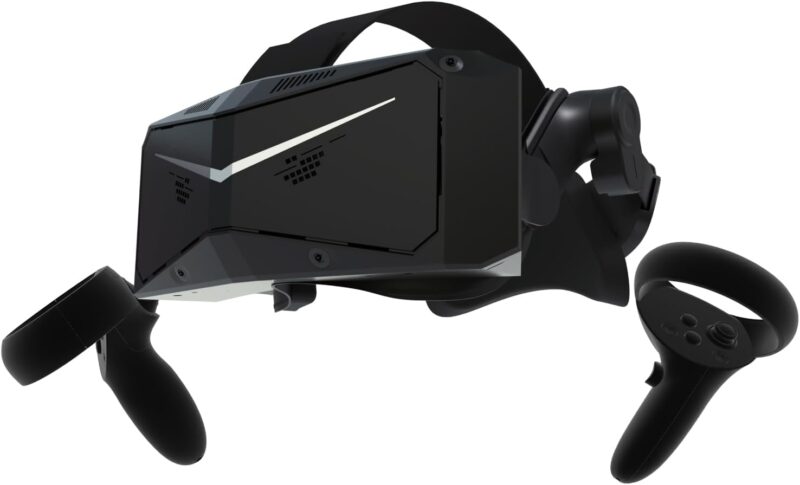
Get your Pimax / LetsFlyVFR Discount on all VR units with the links above or use VFR Code at the checkout to save 2% Today!
5. What Are the Most Common Mistakes Made During Dogfights?
Even experienced fighter pilots can make mistakes under pressure.
Air combat involves rapidly changing circumstances, considerable workloads and the need to make decisions while operating a high-performance aircraft.
Some common problems include:
Target Fixation
Concentrating too heavily on one aircraft can cause a pilot to lose awareness of other threats and surrounding conditions.
Maintaining a broader understanding of the engagement is essential.
Poor Energy Awareness
Failing to understand how aircraft manoeuvres affect speed and altitude can leave a pilot with fewer performance options.
Energy management is particularly important when comparing different aircraft.
Overconfidence
Assuming that an aircraft’s superior performance guarantees success can lead to poor judgement.
Every aircraft has limitations, and every engagement presents different circumstances.
Poor Communication
Inadequate communication between wingmen can create confusion and reduce overall effectiveness.
Ignoring Aircraft Limitations
High-performance fighters are capable of demanding manoeuvres, but structural limitations, engine performance and aerodynamic behaviour still matter.
Understanding these limitations is part of being a competent pilot.
For flight simulator pilots, recognising these mistakes is a useful way to improve performance without simply relying on faster reactions.
6. What Are Some Effective Ways to Evade an Enemy Fighter?
Defensive flying is an important part of fighter aviation.
When a pilot finds themselves threatened by another aircraft, maintaining awareness and understanding the aircraft’s performance limitations become extremely important.
Several general concepts are relevant.
Situational Awareness
Knowing where the threat is located and understanding the surrounding airspace are fundamental to making informed decisions.
Aircraft Performance
A pilot needs to understand the capabilities and limitations of their aircraft, including speed, altitude, manoeuvrability and available performance.
Maintaining Energy
Energy management is important during defensive flying. Excessive energy loss can reduce an aircraft’s available performance and options.
Teamwork
A wingman can provide valuable additional awareness and information during a complex engagement.
Understanding the Environment
Weather, visibility, cloud cover and terrain can all influence what a pilot can see and how an engagement develops.
In a flight simulator, these principles can be explored through historical scenarios and simulated combat missions.
7. What Weapons and Countermeasures Are Used in a Dogfight?
Aircraft weapons and defensive systems have changed dramatically since the earliest days of aerial combat.

During World War I, aircraft initially relied on machine guns, with pilots developing ways to engage opposing aircraft while avoiding their own propellers.
World War II introduced more powerful machine guns, cannons and increasingly sophisticated aircraft designs.
Modern fighter aircraft use a much broader range of weapons and defensive systems.
Aircraft Guns
Internal cannons remain an important component of many fighter aircraft.
They provide a short-range weapon option and have been used extensively throughout the history of air combat.
Air-to-Air Missiles
Modern fighters can carry different types of air-to-air missiles.
These broadly include:
- Infrared-guided missiles.
- Radar-guided missiles.
Their capabilities vary considerably depending on their design and operating requirements.
Chaff
Chaff consists of small reflective materials released to complicate radar tracking.
Flares
Flares produce intense heat and are intended to distract certain infrared-guided threats.
Electronic Warfare
Modern fighters may also employ sophisticated electronic warfare systems designed to interfere with or complicate an opponent’s ability to detect, track and engage them.
It is important to understand that weapons and countermeasures are not interchangeable, and their effectiveness depends on the threat, aircraft systems and operating environment.
8. Why Is Situational Awareness So Important in a Dogfight?

Situational awareness is arguably one of the most important skills a fighter pilot can develop.
It involves understanding what is happening around the aircraft, recognising potential threats and maintaining an accurate picture of the developing situation.
A pilot can have an exceptionally capable aircraft and excellent flying skills but still find themselves in trouble if they lose awareness of their surroundings.
Several factors contribute to situational awareness.
Visual Scanning
A pilot must maintain awareness of the surrounding airspace rather than concentrating on a single point.
Aircraft Instruments
Modern fighter aircraft provide a considerable amount of information through cockpit displays, sensors and warning systems.
Understanding how to interpret this information is essential.
Radio Communication
Information shared by other pilots can help develop a clearer understanding of the overall situation.
Workload Management
A pilot must manage flying, navigation, communications and aircraft systems without becoming overwhelmed.
Experience
Experience helps pilots recognise developing situations and understand which information deserves their attention.
For DCS World and Falcon BMS players, situational awareness is also a skill worth practising.
It is easy to become completely absorbed in the cockpit displays or concentrate on one opposing aircraft while forgetting what else is happening around you.
9. How Do Fighter Pilots Communicate With Their Wingmen During a Dogfight?
Communication is an essential part of military aviation.
Although modern aircraft have advanced communications and information-sharing systems, the fundamental requirement remains the same: pilots must be able to exchange important information quickly and clearly.
Radio Communications
Radio is the primary means of communication between fighter aircraft.
Pilots use standardised terminology and procedures to reduce misunderstandings, particularly during demanding situations.
Pre-Briefed Procedures
Before a mission, pilots establish expectations, responsibilities and communication procedures.
This helps ensure that everyone understands the plan.
Hand Signals
Visual signals have historically been used in aviation when radio communication was unavailable or impractical.
However, modern fighter operations rely predominantly on radio and electronic communications.
Data Links
Many modern military aircraft can exchange information electronically.
These systems can provide pilots with a shared picture of relevant information, depending on the aircraft and network capabilities.
Effective communication helps maintain coordination, reduce confusion and improve overall mission awareness.
10. How Do Weather Conditions Affect Dogfighting?
Weather can have a significant influence on military aviation.
Visibility, cloud cover, precipitation, turbulence and icing can all affect aircraft operations and pilot awareness.
Visibility
Clear weather generally provides better opportunities for visual detection.
Haze, fog and cloud can reduce visibility and make visual identification more difficult.
Cloud Cover
Clouds can restrict visibility and make visual awareness more challenging.
Modern aircraft sensors can help pilots maintain awareness, but they do not eliminate every environmental limitation.
Wind
Wind affects an aircraft’s movement relative to the ground and can influence navigation, formation flying and aircraft handling.
However, it is important to distinguish between movement through the air and movement over the ground.
Turbulence
Turbulence can make aircraft handling more demanding and increase pilot workload.
Icing
Icing is a serious aviation hazard.
Ice accumulation can affect aerodynamic performance, increase drag and alter an aircraft’s handling characteristics.
Thunderstorms
Thunderstorms can produce severe turbulence, wind shear, hail and other hazardous conditions.
Military aircraft are not immune to these dangers simply because they are designed for demanding operations.
Weather is therefore an important consideration in flight planning, aircraft performance and mission execution.
Final Thoughts: What Makes a Successful Fighter Pilot?
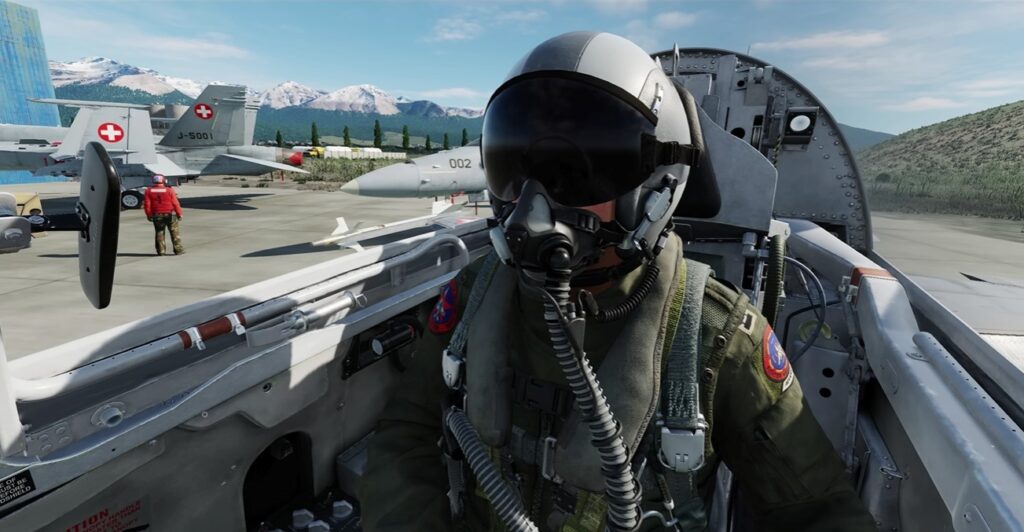
Dogfighting is far more complicated than simply pointing an aircraft at an opponent and attempting to shoot it down.
It combines aircraft performance, energy management, pilot judgement, situational awareness, teamwork and a thorough understanding of aviation.
Technology has transformed modern air combat, but the importance of understanding the aircraft and making good decisions remains unchanged.
For flight simulator enthusiasts, studying these principles adds another dimension to the experience.
Whether you’re flying a World War II fighter or a modern jet in DCS World or Falcon BMS, understanding the principles behind air combat makes the simulation considerably more rewarding.
Keep learning, keep practising and, most importantly, keep looking beyond the specs!
Explore More at LetsFlyVFR
Interested in flight simulation, aviation technology and virtual reality?
Visit LetsFlyVFR for more aviation articles, flight simulator discussions, hardware reviews and practical guides.
Discover our aviation merchandise, flight simulator apparel and accessories through our Etsy store.
Fly Smart. Fly Safe. Fly VFR!
Author
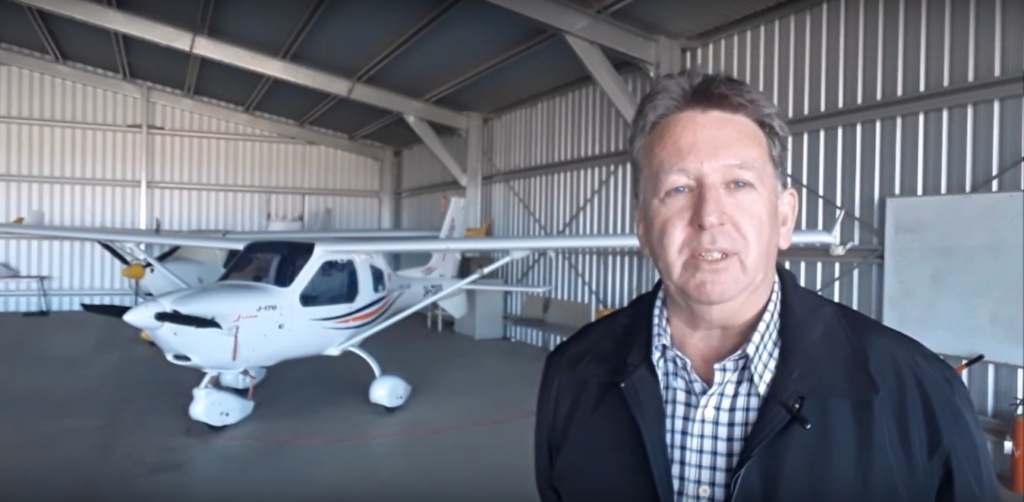
Brendon McAliece (Aka Gunnie) is a military veteran with 23 years working on Jet Fighters, their weapons systems and ejection seat/module systems as well as munitions and R&D. Involved with flight simulation since the 1980s, he has flown all the major flight simulators over the years.
He is an Australian expat who has lived in Malaysia, UK, Saudi Arabia and more recently Thailand. He is a multi-lingual blogger who loves to share his life experiences here on LetsFlyVFR.com and DreamingGuitar.com, with his lifestyle and Travel experiences Blog plus his Dreaming Coffee website.
Learn More @
DreamingGuitar.com – DreamingCoffee.com – LetsFlyVFR.com – LetsFlyVFR ETSY Merch Store!
( HOME – BLOG – SHOP – ABOUT )