
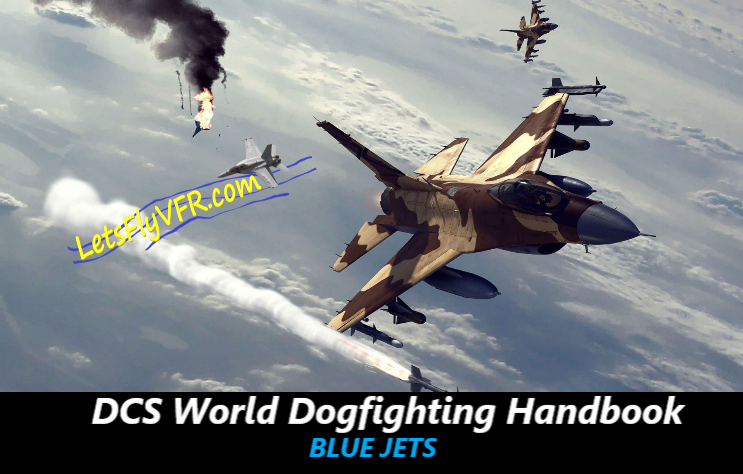
Modern Blue Jets by By LetsFlyVFR.com
Introduction
This handbook is a pilot-focused BFM performance guide for modern BLUE aircraft in DCS World.
It is designed as both a quick reference and a learning aid, emphasizing:
- Real in-sim performance
- Energy management
- Repeatable tactics that work today in DCS
This is not abstract theory. Everything here is written to help you win more fights immediately.
Disclaimer
This guide applies only to DCS World modules.
While DCS aircraft are modelled with exceptional fidelity, performance may differ from publicly available real-world figures due to:
- Weight and stores
- Fuel state
- Atmospheric conditions
- Simulation limitations and updates
Use this guide as a baseline, not an absolute.
Universal BFM Rules.
- Fight the jet you are in, not the jet you wish you were flying.
- Rate fights require speed; angles fights require AoA.
- Energy lost unnecessarily is rarely recovered.
- Vertical maneuvers only work if you can exit downhill..
- If nothing is improving, change the fight.
A Pilot Light Bulb Moment.
In flying these aircraft and checking the figures presented I have realised to my benefit and possibly yours that you have to fly every jet differently. If you fly the F-5E Tiger II like a F-16C Viper you just lose every fight! It’s a true watershed moment for me realising this because I always fly all the aircraft my way! This as it turns out is not the aircrafts desired way to be flown.
Getting a Feel for Your JET!
It takes a while to get the real feel of a jet which includes its best turning speeds and being able to maintain them consistently. Sometimes it requires a bit of preparation with making the control curve of the F-16C less aggressive as its super hard to hold in in its speed band without some effort.
The F-5 Tiger is a great Example!
The F-5E Tiger II needs you to keep it fast and manage the G’s and speed but you can pretty much ignore the AOA unless landing. I tried to fly the speed, G & AOA limits and found it frustratingly impossible to do really well. Once I ditched the AOA monitoring and kept the speed band between 450 and 350 I found my flying much more consistent.
Aircraft Quick Reference (BFM Style).
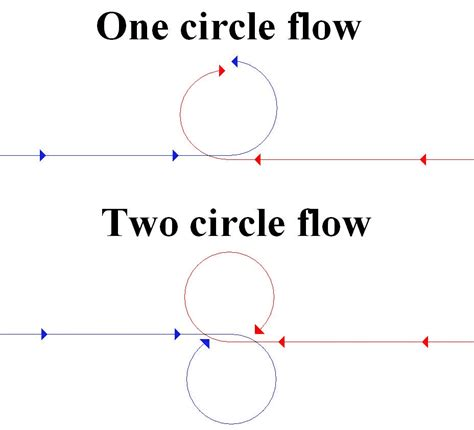
If you’re new the difference between a ONE CIRCLE & TWO CIRCLE flight is how you fly it. Lets quickly review the differences for our new pilots in DCS World.
A one circle flight your constantly turning to face your opponent and jousting like knights of old. Good if you have good nose authority. This is a radius fight where the jet that flies the smallest circle has the advantage.
A two circle fight is where your chasing the other jets six o’clock position. In the sly these two look very different. The two circle fight is a rate fight meaning its how fast your nose moves in degrees per second around the circle.
| Aircraft | Primary BFM Style |
|---|---|
| F-5E Tiger II | One-circle / Radius fighter |
| F-14 Tomcat | Vertical / Hybrid |
| F-15C Eagle | Two-circle / Rate |
| F-16C Viper | Two-circle / Rate king |
| F/A-18C Hornet | One-circle / Angles |
| Mirage 2000C | Precision delta |
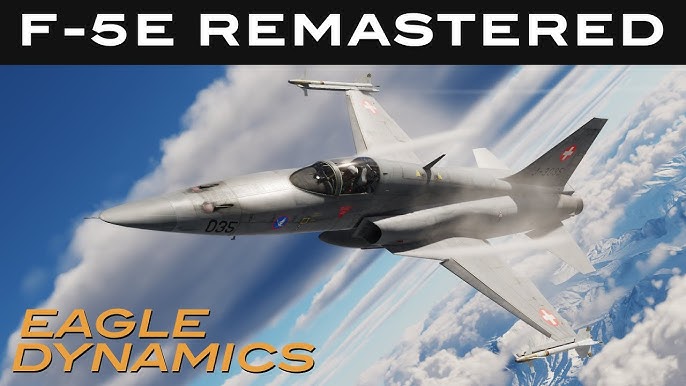
F-5E TIGER II — Max Turn Performance Guide.
Aircraft Character.
The F-5E is a lift-limited, thrust-poor, pilot-dependent fighter.
Flying the F-5E Tiger II well requires smooth application of back stick and not jamming it at full extent because your going to die! These jets roll fast when unloaded so get use to neutralising the controls then roll followed by a smooth pull back to the point you maintain the speed you want and the G will be there. Disregard AOA until your landing after a successful combat mission. speed
- No flight-control protection
- Energy once lost is difficult to regain
- Smoothness beats aggression
- Departures are real
Fastest Sustained Turn Rate (STR).
| Parameter | Target |
|---|---|
| Speed | 350–380 KIAS (sweet spot ~365) |
| AoA | 10–12° |
| G | ~6–6.5 |
| Throttle | MAX / AB |
| Altitude | Sea level – 10,000 ft |
Expected Performance
- ~16–17°/sec sustained
- Excellent radius fighter when flown correctly
Technique
- Pull smoothly to ~11° AoA
- Relax immediately if speed decays
- Trim aggressively — it matters
Instantaneous Turn Rate (⚠️ Use Sparingly)
| Parameter | Target |
|---|---|
| Speed | 300–330 KIAS |
| AoA | 14–16° (MAX) |
| G | 7–7.5 (brief) |
| Throttle | MAX / AB |
⚠️ Warning
- Above ~16° AoA → departure likely
- Asymmetric stores greatly increase risk
- Use only for snapshots or forcing overshoots
- Unload immediately
Mental Model
Discipline, finesse, patience.
You fly the jet it does nothing for you. Keep the speed and watch the Gs.
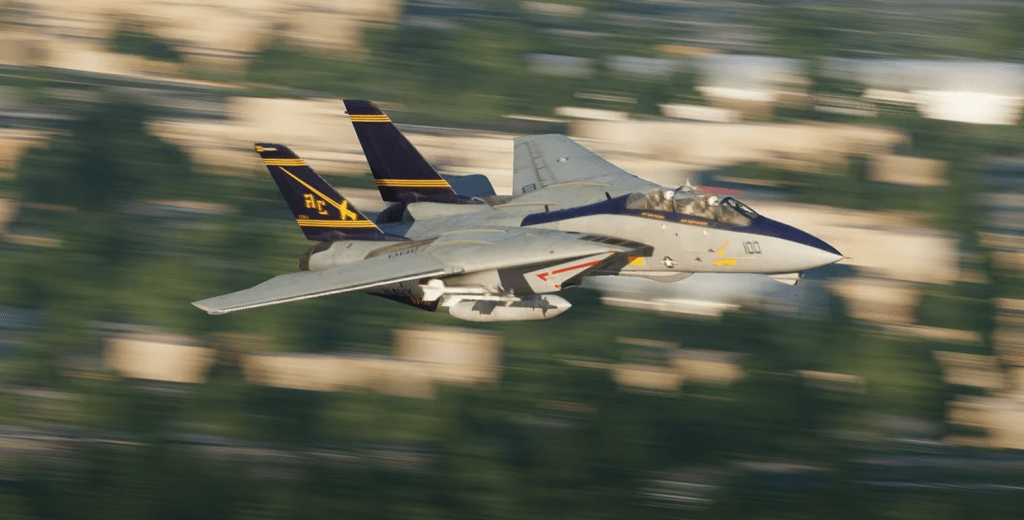
F-14 TOMCAT — Max Turn Performance Guide.
Aircraft Role
High-energy interceptor and vertical BFM fighter.
A big jet for sure requires much more mental horsepower to max perform. Leaving the wing sweep on auto or putting it in manual and using another axis to control them can be of benefit. She’s powerful and bucks and rocks telling you how well your handling her, so listen.
- Dominates when fast
- Punishes poor energy management
Sustained Turn
| Parameter | Target |
|---|---|
| Speed | 330–360 KIAS |
| G | ~6–6.5 |
| Wings | AUTO |
| Throttle | MAX / AB |
Vertical Performance
| Variant | Minimum Loop Entry |
|---|---|
| F-14A | 440–460 KIAS (AB mandatory) |
| F-14B | 420–440 KIAS |
Rule:
Fast Tomcat = vertical bully
Slow Tomcat = one move only
Mental Model
Speed is life – altitude is leverage – drag is the enemy.
F-15C EAGLE — Max Turn Performance Guide.
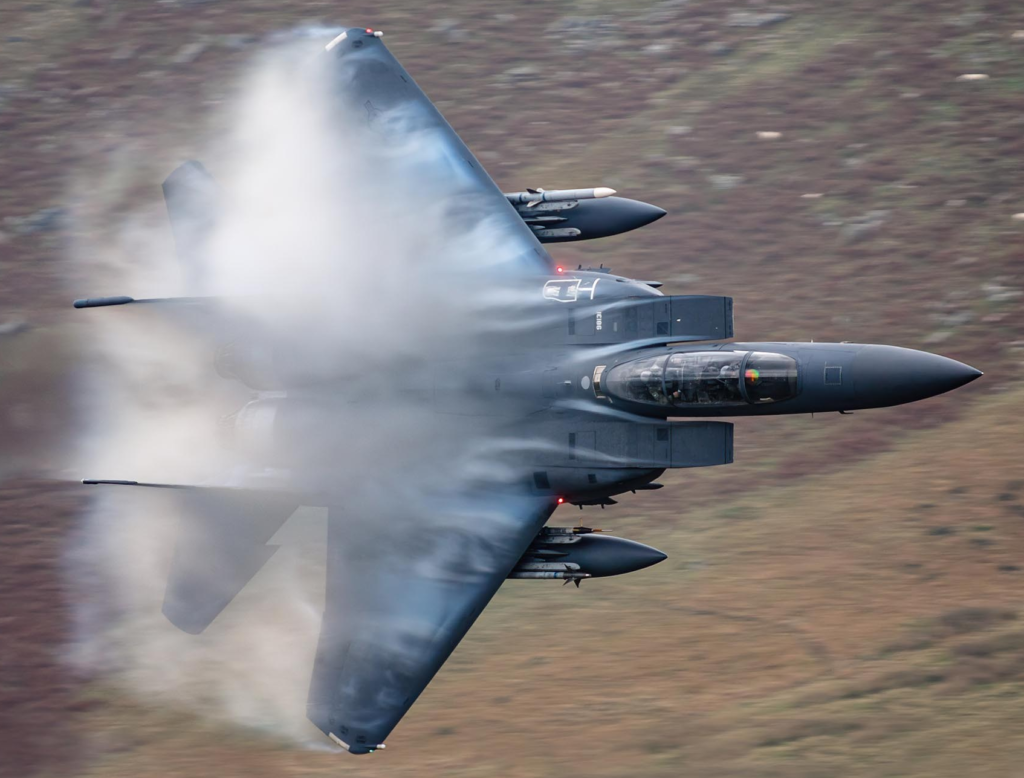
Aircraft Role
Air superiority / energy fighter.
The F-15C Eagle is an incredible aircraft to dogfight in but she’s a big girl like the Tomcat. Easy to see where you may lose sight of the Viper or the Tiger in close BFM manoeuvring. The wing is optimised for higher altitudes as opposed to most others who performs better at lower altitudes below say 15,000 ft. The big wing will allow you to dominate up in the cons! Keep the speed up and don’t get slow is a good plan!
- Exceptional sustained rate
- Dominant at altitude
Sustained Turn Rate
| Parameter | Target |
|---|---|
| Speed | 440–480 KIAS (sweet spot ~460) |
| G | 8–9 |
| Throttle | MAX / AB |
| Altitude | Sea level – 15,000 ft |
Rule:
If the Eagle is fast, it owns the sky.
Mental Model
Speed and rate win fights — slow fights Eagles lose.
F-16C VIPER — Max Turn Performance Guide.
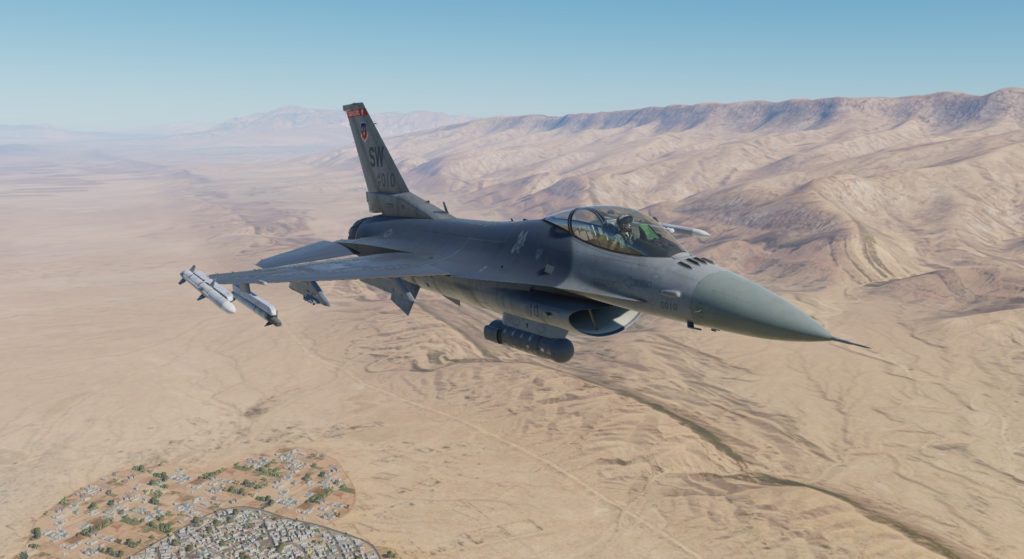
Aircraft Role
High-energy BFM fighter.
The F-16 Viper/Falcon was designed for one task and it was to out dogfight anything in the sky. Its ground breaking fly by wire computer systems limit the Viper to a max of 25 AOA which is relatively small considering other jets. As a consequence the Viper is not intended to be a one circle nose to nose radius fighter.
It will power around the circle like nothing else in the real world but not quite as potent in DCS World. Its a rate fighter so put it at around 440 knots and pull back to get the 9G limit and hold it there.
Your stick movements need to be precise so you may find as I have that extending the curve making it a little less sensitive is a great way to make this easier. You can be at 450 then in a second or two be at 150 knots so you have to be precise with how much you pull back on the stick.
Golden Rule
The Viper is a G-command jet, not an AoA fighter.
- Sustained rate is king
- Pulling slow = death
Fastest Sustained Turn Rate.
| Parameter | Target |
|---|---|
| Speed | 440–480 KIAS (sweet spot ~460) |
| G | 8.5–9 |
| AoA | 2–4° |
| Throttle | MAX / AB |
Below 400 KIAS, the fight is slipping away.
Mental Model
Energy first, always.
F/A-18C HORNET — Max Turn Performance Guide.
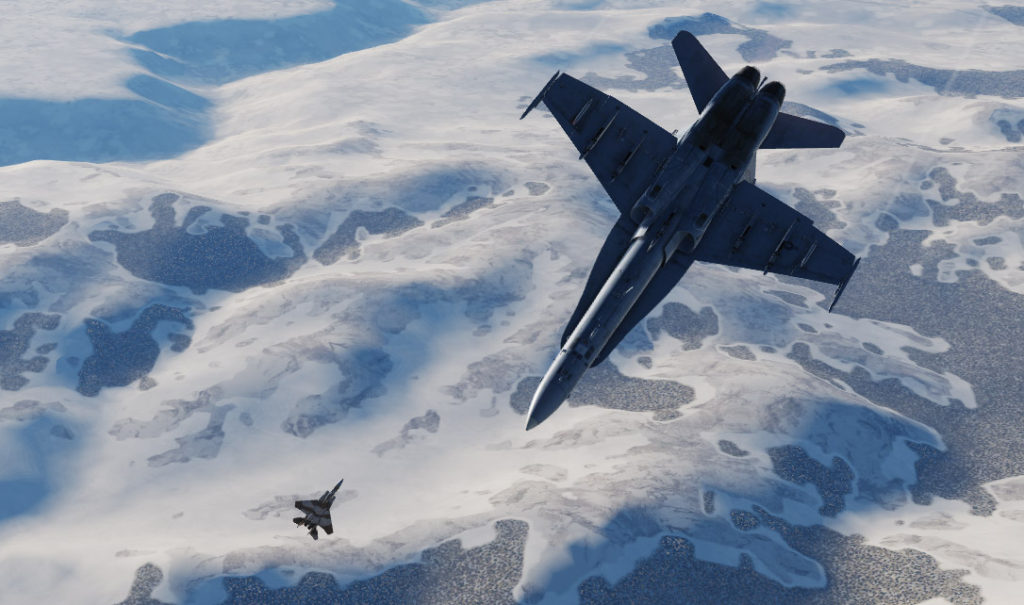
Aircraft Role
Angles fighter with unmatched high-AoA control. The F-18 Hornet at low speed can offer up to 54 Degrees of AOA which is uncredible. The Hornet is outstanding to fly and one of my favorite jets to fire up. Its consistency and ability to fly at its limit is probably its best quality. It’s probably the most trouble free to max perform.
Its poorest quality is lack of punch when it gets slow and then need to pick up speed again. This is a real challenge and how you lose fights against a Viper or Mirage because these along with most other jets get their energy back much faster.
Instantaneous Turn (Angles Fight).
| Parameter | Target |
|---|---|
| Speed | 330–380 KIAS |
| AoA | 35–40° |
| Throttle | MAX / AB |
Use for:
- One-circle fights
- Overshoots
- Snapshots
Sustained Turn (Rate Fight)
| Parameter | Target |
|---|---|
| Speed | 420–440 KIAS |
| AoA | 7–8° |
| Throttle | MAX / MIL |
Mental Model
AoA is the Hornet’s cheat code — energy discipline separates good from great.
MIRAGE 2000C — Max Turn Performance Guide.
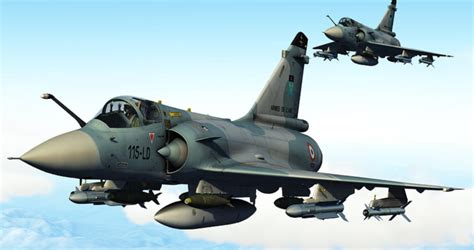
Aircraft Character
Precision delta fighter.
This is the KING of fighters in DCS WORLD! Don’t be fooled by the Viper and Hornet hype because DCS is not real world. IN DCS WORLD the Mirage 200C out performs everything in both a ONE CIRCLE radius fight and the TWO CIRCLE rate fight. Its a monster many disregard!
In early release the cockpit was all in French which was good for realism but not practical for us English speakers. The systems are different from US fighters so its s bit different to learn. If you want a clear advantage then the DCS World Mirage 2000 is your go to jet!
- AoA-limited
- Energy-sensitive
- Rewards finesse
Sustained Turn Rate
| Parameter | Target |
|---|---|
| Speed | 330–360 KIAS (sweet spot ~350) |
| AoA | 9–11° |
| Throttle | MAX / AB |
Mental Model
Precision knife smooth inputs, disciplined AoA. Delta wing jets just stop in the air when the AOA gets too high. Caution
Vertical Loop Entry Speeds (BFM-Real)
Assumptions: clean jet, ~50% fuel, sea level–10,000 ft
| Aircraft | Minimum Practical Entry |
|---|---|
| F-15C | 420–440 KIAS |
| F-16C | 420–440 KIAS |
| F/A-18C | 380–400 KIAS |
| Mirage 2000C | 400–420 KIAS |
| F-5E | 440–460 KIAS |
Final Thoughts
Extended dogfights often end slow and near the deck but they don’t have to.
Understanding when to go vertical, and when not to, separates average pilots from dangerous ones.
DCS World lets us experience air combat with incredible realism without enduring the true violence of sustained high-G manoeuvring.
Fly disciplined.
Respect energy.
Fight your fight.
More guides and tutorials are available at www.LetsFlyVFR.com
Author
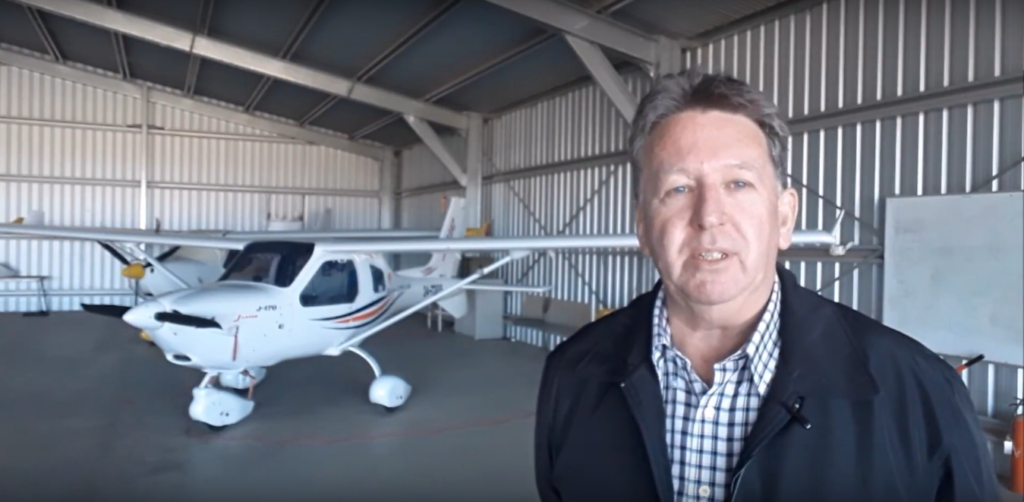
Brendon McAliece (Aka Gunnie) is a military veteran with 23 years working on Jet Fighters, their weapons systems and ejection seat/module systems as well as munitions and R&D. Involved with flight simulation since the 1980s, he has flown all the major flight simulators over the years.
He is an Australian expat who has lived in Malaysia, UK, Saudi Arabia and more recently Thailand. He is a multi-lingual blogger who loves to share his life experiences here on LetsFlyVFR.com and DreamingGuitar.com, with his lifestyle and Travel experiences Blog plus his Dreaming Coffee website.