
X-Plane 12.4 Beta Review – A Major Leap Forward for Performance, VR & Visual Fidelity
Note: X-Plane 12.4 is currently in beta. While it introduces major new capabilities, users should expect bugs, regressions, and compatibility issues with some add-ons until final release.
Introduction: X-Plane 12 Comes of Age
Since its initial release, X-Plane 12 has undergone one of the most ambitious evolution cycles in Laminar Research history. What began as a visually advanced but performance-challenged platform has steadily transformed into a far more optimized, scalable, and future-ready simulator.
With the X-Plane 12.4 beta, Laminar Research delivers a landmark update featuring full multithreaded rendering and separate graphics settings for VR and monitors two long-requested features that fundamentally change how the sim performs, especially for advanced users, cockpit builders, and VR pilots.
This article provides:
- A deep dive into X-Plane 12.4 beta features
- Performance and usability impacts (especially for VR)
- A historical review from 12.0 → 12.4, highlighting how far the platform has come
X-Plane 12.4 Beta – What’s New & Why It Matters
1. Full Multithreaded Rendering (Major Milestone)
What it is:
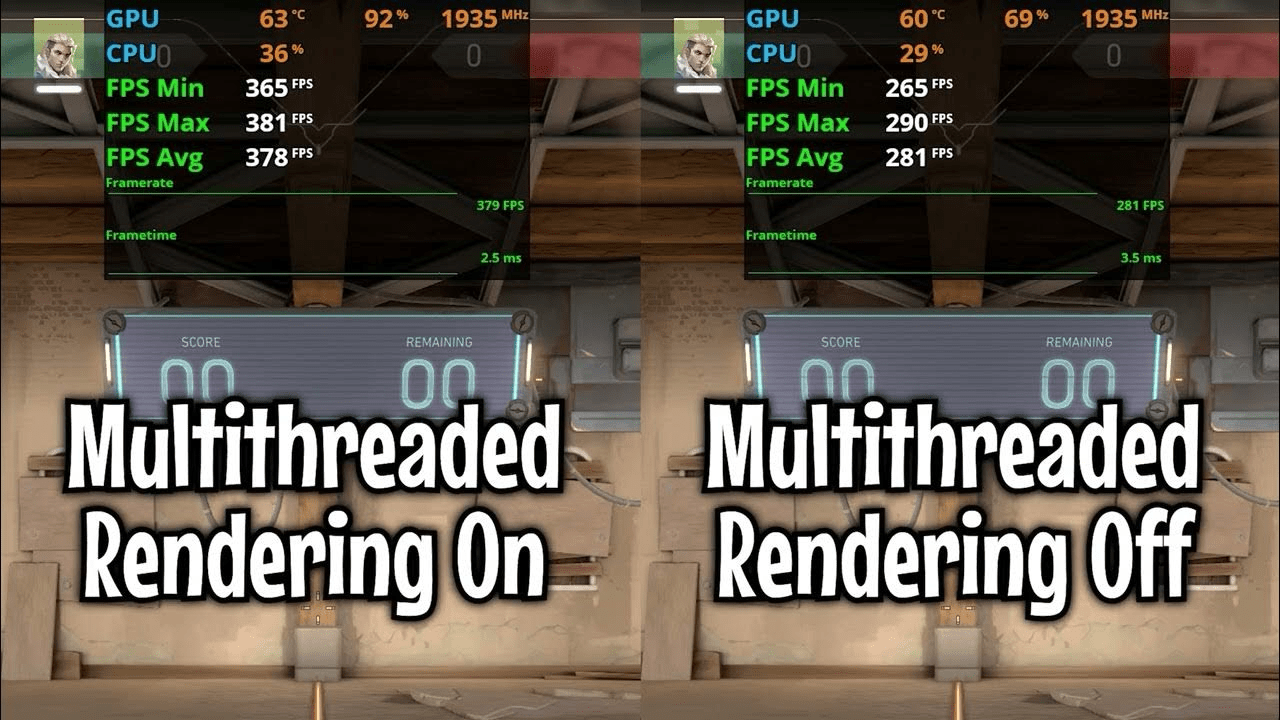
X-Plane 12.4 introduces true multithreaded rendering, allowing the simulator to distribute rendering tasks across multiple CPU cores rather than relying heavily on a single main thread.
Benefits:
- Dramatically improved CPU utilization on modern multi-core processors
- Reduced main-thread bottlenecks
- Smoother frame pacing, especially in complex scenery and aircraft
- Higher and more stable FPS in CPU-limited scenarios
Performance Impact:
- Particularly noticeable at large airports, dense weather, and high object settings
- Major uplift for users previously CPU-bound rather than GPU-bound
- Lays groundwork for future rendering and simulation complexity
Why this is huge:
This change modernizes X-Plane’s core architecture and ensures long-term scalability as CPUs continue adding cores rather than raw clock speed.
2. Separate Graphics Settings for VR and Monitor Use
What it is:
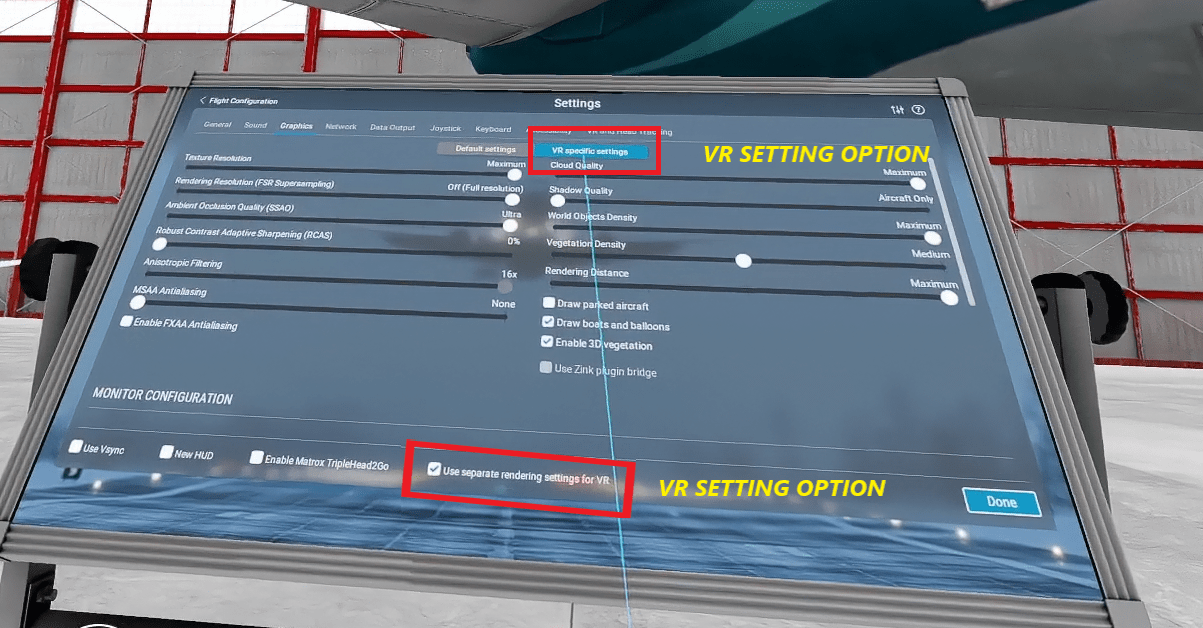
Users can now define independent graphics profiles for:
- Monitor (2D) flying
- Virtual Reality (VR)
Benefits:
- No more constantly changing settings when switching between VR and desktop
- Optimized clarity and performance for each mode
- Better VR experience without compromising monitor visuals
VR-Specific Gains:
- Lower latency
- Improved frame stability
- Easier tuning for headsets like Reverb G2, Quest, Pico, and Varjo
Why it matters:
For VR pilots, this is one of the most impactful quality-of-life improvements ever added to X-Plane.
3. Rendering Pipeline & Engine Optimizations

- Improved frame scheduling
- Reduced stutters during scenery loading
- Better utilization of modern GPUs
- Cleaner interaction between CPU simulation and GPU rendering
These changes complement multithreading and result in a sim that simply feels smoother.
4. Stability, Bug Fixes & Ongoing Refinement (Beta Caveats)
As with any beta:
- Some plugins may break
- Aircraft using custom drawing code may need updates
- Occasional regressions are possible
Laminar Research strongly recommends:
- Backing up your install
- Using a separate copy for beta testing
Known bugs are the VR Band that appears with FXAA selected. Turn it off and the black band that appears as you look left disappears.
A second bug is when calibrating a controller one your finished and its doing the check centre calibration it freezes and you have to restart. at the moment I’m not sure if the calibration actually takes effect.
Looking Back: The Evolution of X-Plane 12
X-Plane 12.0 – A New Foundation
Key Focus: Visual realism & atmospheric simulation
Highlights:
- New volumetric clouds
- Physically based lighting
- Advanced weather engine
- Seasonal effects
- New water & wave simulation
Challenges:
- Heavy CPU usage
- Performance issues in VR
- Inconsistent frame times
12.0 laid the groundwork but clearly needed optimization.
X-Plane 12.1 – Stability & Performance Focus
Improvements:
- Significant bug fixes
- Better GPU utilization
- Reduced VR stutters
- Weather and lighting refinements
This update marked the beginning of Laminar’s optimization push.
X-Plane 12.2 – Weather, Flight Model & Rendering Refinements
Key Enhancements:
- Improved cloud rendering performance
- More accurate turbulence modeling
- Better ground handling
- Refinements to the flight model edge cases
12.2 improved realism while continuing to claw back performance.
X-Plane 12.3 – Maturity & Polish
Highlights:
- Smoother frame pacing
- Reduced CPU spikes
- Improved Vulkan/Metal stability
- Incremental VR improvements
By 12.3, X-Plane 12 felt far more stable and usable for daily flying.
Why X-Plane 12.4 Changes Everything
With 12.4 beta, X-Plane moves from “catching up” to “setting the stage”:
- Multithreading future-proofs the platform
- VR support becomes first-class, not secondary
- Performance finally matches the visual ambition of XP12
This update doesn’t just add features it removes long-standing limitations.
What This Means for the Future of X-Plane
X-Plane 12.4 signals:
- Better support for high-end hardware
- More headroom for complex aircraft and avionics
- A stronger foundation for ATC, AI traffic, and weather expansion
- Renewed competitiveness with other modern flight simulators
For long-time users, this is the version many hoped X-Plane 12 would become.
Final Thoughts
X-Plane 12.4 beta represents one of the most important updates in the simulator’s history. While it is still a beta and not without risk, the benefits especially for VR pilots and performance-conscious users are substantial.
From 12.0’s ambitious but heavy launch to 12.4’s architectural breakthrough, Laminar Research has demonstrated long-term commitment to evolving X-Plane into a modern, high-performance flight simulation platform.
If the beta stabilizes as expected, X-Plane 12.4 may well be remembered as the update where X-Plane truly hit its stride.
Author
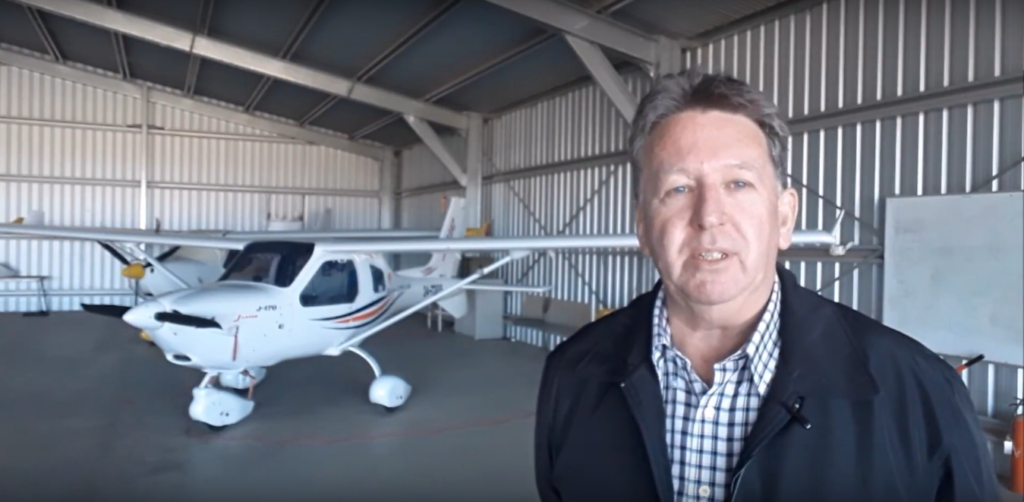
Brendon McAliece (Aka Gunnie) is a military veteran with 23 years working on Jet Fighters, their weapons systems and ejection seat/module systems as well as munitions and R&D. Involved with flight simulation since the 1980s, he has flown all the major flight simulators over the years.
He is an Australian expat who has lived in Malaysia, UK, Saudi Arabia and more recently Thailand. He is a multi-lingual blogger who loves to share his life experiences here on LetsFlyVFR.com and DreamingGuitar.com, with his lifestyle and Travel experiences Blog plus his Dreaming Coffee website.